The creative operations landscape has shifted from a “discovery” phase into a “production” phase. For those managing asset pipelines, the novelty of a single high-quality generation has worn thin. The bottleneck is no longer whether a machine can create a beautiful image, but whether a team can produce five hundred of them that adhere to a specific brand logic without the system collapsing under its own latency. When we look at the current ecosystem, tools like Nano Banana Pro are positioned at this exact intersection of high-volume throughput and creative governance.
Creative ops leads are naturally skeptical. We have seen enough “revolutionary” tools that offer stunning single-frame outputs but fail as soon as you attempt to scale them into a repeatable workflow. The challenge with most generative systems is the “drift”—the tendency for an AI to lose the thread of a campaign’s visual identity over multiple iterations. To solve this, we have to look beyond the prompt box and into the underlying architecture of tools like Banana Pro.
The Throughput Problem in Generative Media
Most generative platforms are designed for the hobbyist or the solo creator. They prioritize the “wow” factor of a single result. In a professional creative operations environment, the priority is predictability. If a performance marketing team needs thirty variations of a hero image for A/B testing, they cannot afford a tool that requires thirty bespoke, hand-crafted prompts.
This is where the distinction between a general-purpose model and a specialized engine like Nano Banana Pro becomes visible. The goal here isn’t just generation; it is the reduction of friction between an idea and a deployable asset. For an operations lead, the “High-Volume Threshold” is the point at which a tool either becomes a force multiplier or a management burden. If your team is spending more time “fixing” AI outputs in Photoshop than they would have spent creating the original asset, the tool has failed.
Assessing the Canvas Workflow Logic
One of the more practical developments in this space is the move away from the linear chat interface toward a canvas-based environment. Within the Banana AI ecosystem, the focus on a “Canvas Workflow” suggests an understanding of how designers actually work. They don’t work in a vacuum; they work in layers and iterations.
A canvas allows for spatial reasoning. You aren’t just generating an image; you are placing it in context. When utilizing an AI Image Editor within a professional pipeline, the ability to perform image-to-image transformations—taking a low-fidelity sketch or a brand-approved layout and “upgrading” it through the AI—is far more valuable than a text-to-image prompt. It allows the creative lead to maintain control over composition and structure, delegating only the “rendering” to the machine.
However, we must be realistic about the limitations here. While canvas workflows reduce some of the “black box” nature of AI, they do not eliminate it. There is still a degree of uncertainty in how different models, such as the Banana Pro or the newer iterations, interpret spatial cues. A lead must account for a 15-20% failure rate in any high-volume run, where the AI might misinterpret the depth or the lighting consistency across multiple frames.
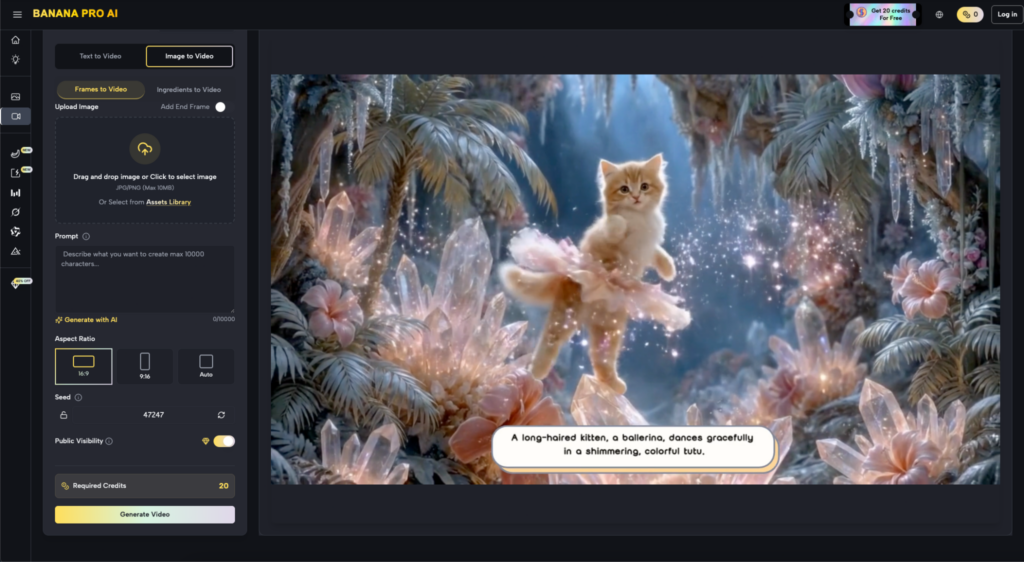
The Technical Edge of Nano Banana Pro
The naming convention of Nano Banana Pro implies a specific focus on efficiency and speed. In the world of creative ops, “Nano” usually refers to models that are optimized for lower latency. This is critical for real-time iteration. If a designer has to wait sixty seconds for a preview, the flow state is broken. If they get a response in five seconds, they can iterate ten times in a minute.
In our internal benchmarks of various high-speed models, we’ve found that the trade-off is often “prompt adherence.” Smaller, faster models sometimes struggle with complex, multi-subject prompts. This is a crucial expectation-reset for any team: do not expect a high-speed model like Nano Banana to handle a paragraph of descriptive text with the same nuance as a heavy, slow-moving model. Its strength lies in its utility as a “sketching” tool or a high-volume variation engine.
For Nano Banana, the value proposition is likely centered on this speed-to-output ratio. When you are building a pipeline for a social media agency that requires 100+ visual assets per day, the “pro” designation shouldn’t just mean “better images,” it should mean “better reliability.”
Workflow Integration and Image-to-Image Utility
The most significant shift in creative ops is the move toward “Image-to-Image” (I2I) workflows. Text prompts are inherently imprecise. Language is subjective. A “modern minimalist aesthetic” means ten different things to ten different designers.
By using I2I within the Banana Pro framework, creative leads can set a visual “anchor.” You provide the system with a color palette, a basic composition, and a lighting reference. The AI then fills in the details. This is where the AI Image Editor becomes a legitimate tool for creative governance. Instead of hoping the AI understands your brand, you show it.
This approach also mitigates one of the largest risks in AI production: copyright and brand safety. By starting with a brand-owned base image or a custom-shot photography plate, the AI is merely enhancing or modifying existing IP rather than generating something from a nebulous, unvetted dataset. It keeps the “creative soul” of the project within the agency’s walls.
The Reality of AI Video in Professional Pipelines
We cannot discuss creative ops without touching on video. The industry is currently in a state of high-functioning chaos regarding AI-generated video. While tools like the Banana 2 AI or Seedance 2.0 offer glimpses into a future of automated motion, the “Last Mile” problem is still very much present.
In a professional setting, the limitation of AI video is usually temporal consistency. If you generate a five-second clip of a person walking, the person’s clothes might change color by the fourth second. This is an area where we must maintain a healthy skepticism. For background plates, b-roll, or abstract visualizers, these tools are production-ready. For high-stakes character-driven narratives, they are not yet a “one-click” solution.
A creative ops lead should view these video capabilities as “texture generators” rather than “final-cut generators.” The goal is to use them to create elements that can be composited into a traditional edit, rather than trying to output a finished commercial directly from a prompt.
Governing the Output: Quality Control at Scale
When you increase volume, you inevitably increase the noise. A team producing 500 images a day cannot have a human eye on every single pixel for an hour. To manage this, creative ops leads are developing “Triage Workflows.”
- The Generation Tier: Using Nano Banana Pro for mass generation of concepts.
- The Refinement Tier: Using the AI Image Editor to fix specific artifacts—hands, text, or lighting inconsistencies.
- The Upres Tier: Taking the best 10% of those assets and pushing them through high-fidelity models or manual retouching.
This tiered approach ensures that the “High-Volume Threshold” doesn’t lead to a “Low-Quality Outcome.” You are essentially using the AI to filter the creative possibilities down to the strongest candidates.
Benchmarks and Evidence-First Adoption
Before integrating any tool like Banana AI into a production stack, it’s necessary to run a pilot. We recommend a “Stress Test” consisting of three specific tasks:
- The Consistency Test: Can the tool produce five variations of the same product shot with identical lighting?
- The Latency Test: What is the average time-to-delivery during peak usage hours?
- The Export Test: Does the tool integrate with existing software (Photoshop, Premiere, DaVinci) without creating format-related friction?
If a tool fails the consistency test, it belongs in the “ideation” phase, not the “production” phase. From our observation, the more a platform leans into the “Pro” designation, the more it prioritizes these technical benchmarks over purely aesthetic ones.
Conclusion: Moving Beyond the Hype Cycle
The era of being “impressed” by AI is over. We are now in the era of being “productive” with it. For a creative operations lead, the focus shouldn’t be on which tool is the most “powerful,” but which tool is the most “governable.”
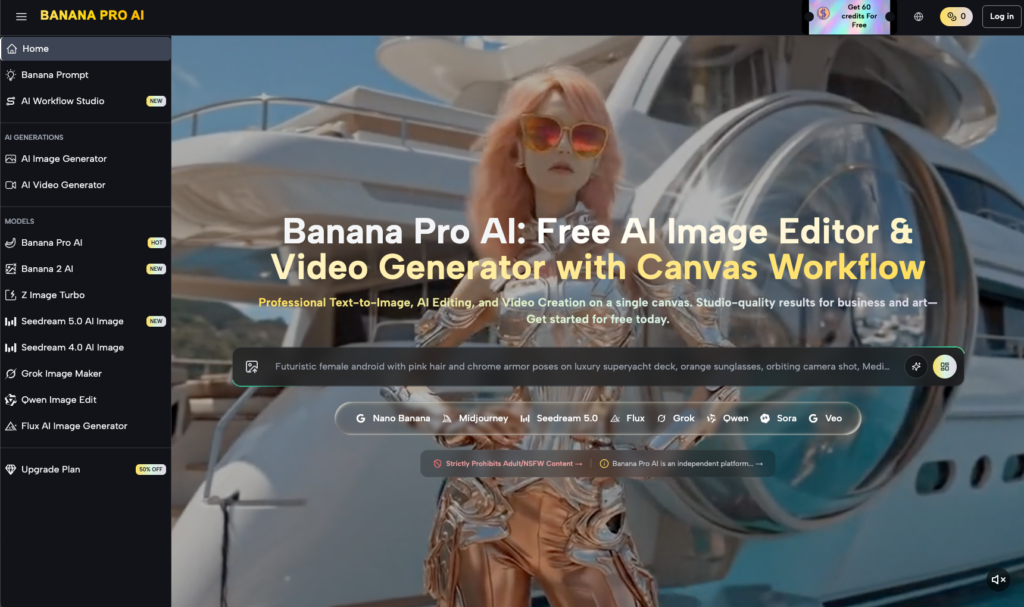
Nano Banana Pro and the broader suite of tools available on the Banana Pro AI platform represent a move toward this governability. By offering a mix of high-speed models, canvas-based workflows, and image-to-image capabilities, they provide the levers necessary to manage a modern asset pipeline.
However, the success of these tools ultimately depends on the human operator. AI does not replace the need for a creative director; it increases the need for one who understands how to manage an algorithmic workforce. We are trading the “brush” for the “dashboard,” and as we move past the high-volume threshold, the dashboard is where the real work happens.
In the final analysis, keep your expectations grounded. No AI tool is a magic bullet. There will be hallucinations, there will be server downtime, and there will be prompts that simply do not work. But for the team that builds a robust, skeptical, and evidence-based workflow around these tools, the potential for scale is finally within reach.