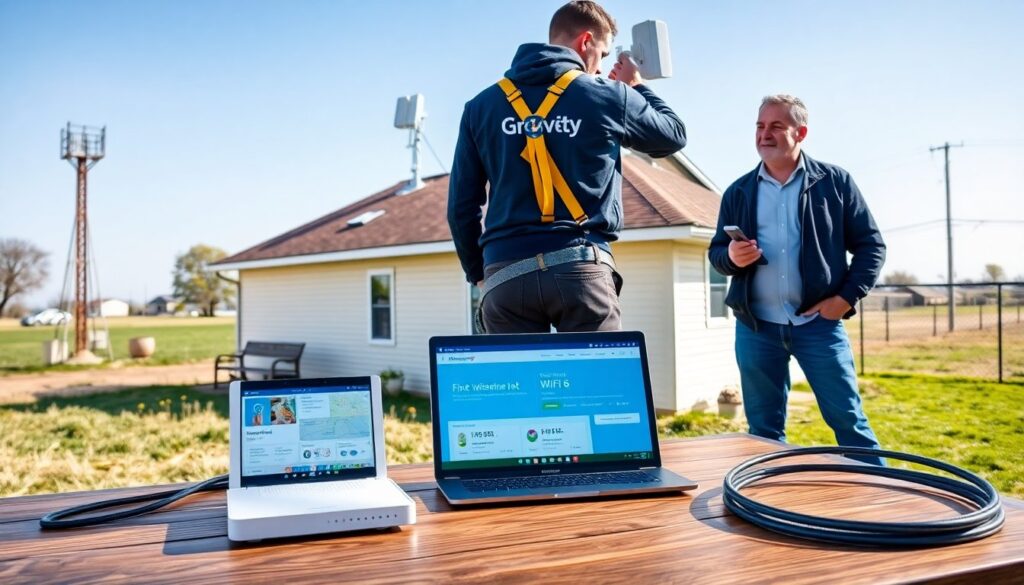
Gravity Internet.net offers internet service with a focus on rural coverage and wireless backhaul. The company provides fixed wireless, fiber partnerships, and customer tools. Readers will learn what gravity internet.net does, who it serves, and how it differs from other providers. The introduction sets clear expectations and prepares readers to compare plans, performance, and setup steps.
Key Takeaways
- GravityInternet.net specializes in providing fixed wireless internet service to rural homes and small towns with limited wired access.
- The provider uses a combination of fixed wireless radios, local fiber partnerships, and online tools to deliver reliable internet with straightforward pricing and local support.
- Customers typically experience speeds from 25 Mbps to 500 Mbps, with performance depending on line-of-sight and backhaul quality.
- GravityInternet.net enhances security with encrypted links, managed firewalls, and regular firmware updates to maintain network reliability.
- Getting started involves checking coverage online, scheduling a site survey, and either technician installation or self-install with support, making setup flexible for customers.
- The company’s service portal allows easy account management, speed testing, plan upgrades, and static IP requests for both residential and business users.
What Is GravityInternet.net? Who It Serves And How It Differs From Other ISPs
Gravity Internet.net is an internet service provider that targets areas with limited wired access. It serves rural homes, small towns, and businesses that lack reliable cable or DSL. The company uses fixed wireless links and local fiber partnerships to reach customers. It differs from national ISPs by focusing on last-mile wireless and on-site radios. Gravity internet.net works with community towers and leased fiber to lower construction costs. It offers flexible installation for properties that sit far from a street cabinet. The company also provides a simple online portal for speed testing and account management. Competing ISPs rely on large fiber builds or cable networks. Gravity internet.net relies on radio line-of-sight and existing utility poles more often than trenching. For customers who cannot get cable or pure fiber, gravity internet.net often provides a faster option than satellite. The provider also targets customers who value straightforward pricing and local customer support.
Key Features And Technology Behind GravityInternet.net
Gravity Internet.net uses fixed wireless access as its core delivery method. The company mounts small radios on towers or on customer roofs. The radios connect to a nearby hub that links to fiber. Gravity internet.net uses licensed and unlicensed spectrum depending on local rules. It also offers fiber-on-demand where fiber runs exist nearby. The provider supports modern Wi-Fi 6 routers for in-home coverage. Gravity internet.net includes network management tools that show usage, signal strength, and device lists. The company offers managed firewall options and DNS filtering for families and small businesses. It also supports static IPs for users who host services. Gravity internet.net updates firmware remotely to reduce onsite visits. The provider tests links for latency and packet loss before activation. This step helps set realistic speed expectations. Gravity internet.net scales capacity by adding sector radios and backhaul fiber when demand grows.
Performance, Security, And Reliability: Real-World Expectations
Gravity Internet.net delivers variable speeds depending on line-of-sight and backhaul quality. Typical plans deliver 25 Mbps to 500 Mbps. Customers with clear sightlines often see consistent throughput and low latency. Users behind trees or hills may see slower speeds or more variability. Gravity internet.net measures latency and packet loss as part of its service tests. The company applies quality-of-service rules to prioritize video calls and gaming on higher tiers. For security, gravity internet.net offers encrypted links between radios and hub sites. It also provides optional managed firewalls and regular firmware patches. The provider maintains redundant backhaul where possible to reduce outages. Gravity internet.net publishes maintenance windows and outage reports for transparency. In winter or heavy storms, wireless links may require retuning or antenna adjustment. The company dispatches technicians when remote fixes fail. For business critical use, gravity internet.net recommends a backup link or an SLA-based service level agreement.
Plans, Pricing, And A Step-By-Step Guide To Getting Started
Gravity Internet.net offers tiered plans with straightforward pricing. Plans start with basic home service and scale to business packages with static IPs. The provider lists monthly rates and any one-time installation fees on its site. Discounts often apply for annual prepay or for community deployments. To start, a customer checks address availability on gravity internet.net. The company runs a coverage map and a line-of-sight tool. Next, a technician schedules a site survey if radios or roof mounts are needed. The survey confirms signal strength and any potential obstructions. After confirmation, gravity internet.net ships equipment or schedules a technician visit. The technician mounts the radio, aligns the antenna, and tests throughput. The customer then activates the service through the online portal. Gravity internet.net includes basic router setup and Wi-Fi optimization in standard installs. For users who want self-install, the company offers step-by-step guides and phone support. Customers can upgrade plans or request static IPs through the portal. Billing runs monthly with options for autopay and electronic invoices. For cancellations, gravity internet.net posts clear terms and any early termination fees before signup.