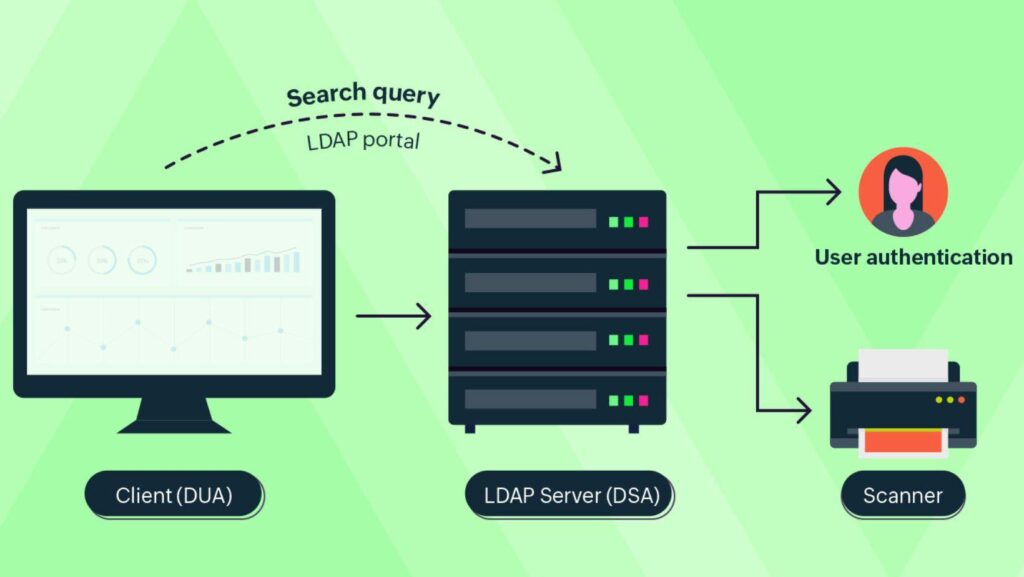
LDAP injection rarely makes headlines the way ransomware or major data breaches do, but the underlying risk is just as real for any application that authenticates users or searches a corporate directory. A single unsanitized input field can let an attacker manipulate directory queries, bypass authentication, or extract information that was never meant to be exposed. Defending against this class of vulnerability does not require exotic tools. It requires consistent application of a handful of well-established practices: input validation, parameterized queries, least privilege access, thorough logging, and secure development habits built into the process from the start.
Why a Single Layer of Defense Isn’t Enough
Organizations sometimes treat one defensive measure, such as input filtering, as sufficient protection against LDAP injection on its own. In practice, relying on a single control tends to leave gaps, because different parts of an application handle user input differently, and a filter applied at one entry point rarely covers every path data can take into an LDAP query. An attacker only needs to find the one place where sanitization was missed or implemented inconsistently.
A more resilient approach layers several defenses together, so that a weakness in one does not automatically translate into a successful attack. Validation, safe query construction, restricted permissions, and monitoring each address a different stage of the risk, from preventing malicious input in the first place to limiting damage if something slips through and detecting it quickly if it does.
Input Validation as the First Checkpoint
Validation is often the first opportunity to stop malicious input before it ever reaches a query. This part of ldap injection attack defense focuses on restricting what characters and formats are accepted from users, rather than trying to catch malicious patterns after the fact. A username field, for instance, has a predictable and limited set of valid characters. Rejecting anything outside that set closes off a wide range of potential injection attempts before they can do harm.
Effective validation works best when it is specific to the context of the input rather than applied generically across an entire application. A search field that allows broader text input needs different handling than a login field expecting a narrow username format. Allowlisting, where only explicitly permitted characters or patterns are accepted, tends to hold up better than denylisting, since it does not depend on anticipating every possible malicious character combination an attacker might try.
Parameterized Queries and Proper Escaping
Validation alone does not fully solve the problem, because even legitimate input can contain characters with special meaning in LDAP filter syntax. This is where parameterized queries become central to ldap injection attack defense. Rather than building a query by concatenating strings, a parameterized approach separates the query structure from the data supplied by the user, so that input is always treated as a literal value rather than as part of the query’s logic.
Where a well-tested LDAP library is available, using its built-in parameterization or escaping functions is generally more reliable than writing custom escaping logic from scratch, since these libraries are typically maintained with security fixes as new attack patterns emerge. Guidance from Semperis on defending against LDAP injection attacks points to inconsistent or manual escaping as a recurring weakness, particularly in older applications where LDAP integration code was written before these libraries were widely adopted or well understood.
Least Privilege for Directory Service Accounts
Even with strong validation and safe query construction, an application’s LDAP service account should never have more directory access than its function strictly requires. If an injection attempt does succeed despite other defenses, the scope of what an attacker can see or modify depends directly on what that service account is permitted to do. A service account limited to read access on a narrow portion of the directory does far less damage under exploitation than one with broad administrative rights.
Applying this principle in practice means reviewing what each application’s LDAP connection actually needs, rather than defaulting to broad access for convenience during development. It also means revisiting those permissions periodically, since application requirements change over time and access originally scoped correctly can become excessive as features are added or removed. Treating service account permissions as a security control in their own right, not just a configuration detail, closes off a significant amount of potential damage from any defense that fails elsewhere.
Logging, Monitoring, and Secure Development Habits
Detection matters because prevention, however well implemented, cannot guarantee that every attempt is stopped. Logging LDAP queries, particularly failed or unusual ones, gives security teams the visibility needed to spot an injection attempt in progress rather than discovering it only after data has been exposed. Patterns such as repeated queries containing unusual special characters, or a sudden spike in failed authentication attempts from a single source, often indicate exactly this kind of probing.
Building these protections into development practice from the start tends to work better than retrofitting them after an application is already in production. A few habits make the difference over time:
- Including LDAP-specific injection scenarios in code review checklists, not just general input validation review
- Testing authentication and search features with deliberately malicious input as part of routine quality assurance
- Documenting which parts of an application construct LDAP queries, so future developers understand where extra caution applies
- Revisiting third-party or legacy integrations periodically, since these are common sources of outdated query construction methods
None of these steps require significant additional tooling. They require treating LDAP integration as a security-relevant part of the codebase deserving the same scrutiny given to other authentication and data-access logic.
Key Takeaways
Protecting against directory injection works best as a combination of measures rather than any single fix. Input validation stops much malicious input before it reaches a query. Parameterized queries and proper escaping ensure that whatever input does get through is treated as data, not logic. Least privilege limits the consequences if an attack still succeeds. Logging and monitoring provide the visibility needed to catch attempts that other defenses miss, and secure development habits keep these protections consistent as applications evolve.
Applications that handle authentication or directory searches carry this risk continuously, not just at launch. Maintaining these defenses requires periodic review as code changes, dependencies are updated, and new features are added, since a protection implemented correctly once can quietly weaken over time without regular attention.