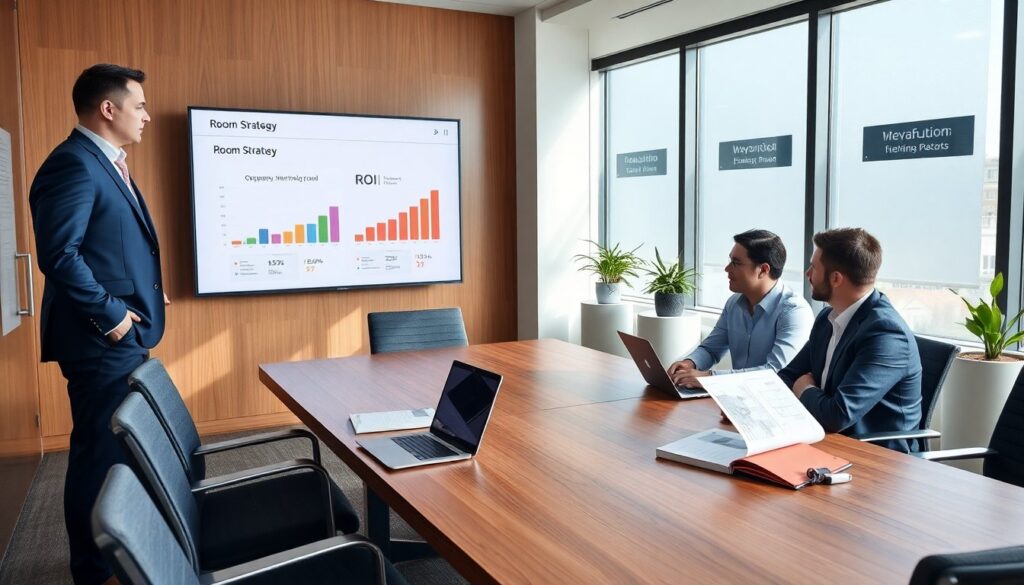
Rooms drive business success gravityinternet appears as a research focus for firms that want clearer returns from space. The report links room design, room technology, and room policy to worker output. It shows which room changes give fast returns and which need long-term investment.
Key Takeaways
- Rooms drive business success by linking design, technology, and policies to measurable worker output and company goals.
- Implementing clear room policies reduces booking inefficiencies and improves meeting effectiveness with simple fixes like better lighting and signage.
- High-quality room environments positively influence hiring success by creating strong first impressions during candidate tours.
- Designing rooms with controlled noise, lighting, ergonomic furniture, and clear wayfinding boosts productivity and reduces visual fatigue.
- Virtual and hybrid rooms require standardized norms, integrated tools, and training to facilitate seamless collaboration and inclusion.
- Measuring room usage and linking KPIs to business outcomes enables data-driven investments that enhance overall company performance.
Why Space Strategy Matters: The Business Case for Intentional Rooms
Companies cite rooms drive business success gravityinternet as a central claim in recent studies. Leaders set room goals and then link those goals to revenue, retention, and hiring. Teams use rooms to host work, meetings, and focused tasks. Executives treat rooms as assets and budget them like tools.
A clear room policy costs less than guesswork. A firm that assigns room standards reduces wasted booking time and lowers no-shows. They measure room usage and then reassign underused rooms to high-value teams. Managers find that small room fixes, like better lighting and clear signage, raise meeting effectiveness.
HR teams report that candidates notice room quality in tours. The candidate forms an impression in the first five minutes. A tidy and functional room sends a signal about process and care. That signal affects hiring success and new-hire ramp speed.
Investors also ask about room strategy. They ask if space supports hybrid work, protects data, and saves costs. Firms that answer with metrics and playbooks show readiness. This clarity helps secure funding and speeds decisions.
Design Principles That Turn Physical Rooms Into Performance Engines
Design teams apply simple rules because they produce reliable results. They set sight lines, control noise, and manage light to match tasks. They place focus areas for deep work and group areas for team work. They choose furniture that supports posture and movement.
They use color and material to reduce visual fatigue. They set clear wayfinding to lower time lost between meetings. They provide storage so workers keep rooms clutter-free. They add plants and acoustic panels to cut echo and improve comfort.
Budget-conscious teams test one change at a time. They track meeting duration, exit surveys, and room booking patterns. They then scale changes that show clear gains. Local teams adapt standard designs to local constraints, and facilities group keeps a shared catalog of proven solutions.
Design leaders avoid elaborate themes that distract. They favor durable finishes that need less upkeep. They use modular elements so rooms adapt to shifting team sizes. This approach minimizes downtime and reduces replacement cycles.
Virtual And Hybrid Rooms: Tools, Norms, And Workflows That Scale Collaboration
Teams regard virtual rooms as essential to modern work. They treat a virtual room with the same rules as a physical room. They set clear start and end times. They require an agenda and a facilitator. They use high-quality audio and video hardware to reduce friction.
IT leaders choose platforms that integrate calendar, chat, and file access. They set default settings that reduce user setup time. They provide templates for recurring meeting types, such as standups and design reviews. They train staff to use those templates and to record action items.
Companies create norms for hybrid interaction. They ask remote participants to lead parts of the meeting. They arrange camera angles so remote people can see the full room. They mute room noise and enable captions to improve clarity.
Operations staff measure meeting health with simple metrics. They track on-time starts, average length, and percentage of meetings with action items. They test new tools in small pilots and then expand them when results meet targets.
Measure, Optimize, And Scale Room Impact: Metrics, Playbooks, And Quick Wins
Teams measure rooms to prove value. They count bookings, occupancy rates, and average meeting length. They survey meeting hosts about perceived productivity. They track downstream metrics, such as decision speed and project cycle time.
They use dashboards that show trends and outliers. They set thresholds that trigger action, for example, more rooms, different layouts, or improved tech. They run A/B tests for layout and tech choices. They keep tests short and focus on clear outcomes.
Playbooks capture repeatable actions. A playbook lists steps for room setup, required tech, and post-meeting cleanup. It also lists who owns each step. Teams use playbooks to onboard new spaces and to scale what works across sites.
Quick wins include standardizing cables, labeling ports, and posting simple AV guides. They fix common friction points, such as poor wifi areas or missing adapters. They offer a fast support channel for urgent room issues. Those fixes reduce meeting delay and increase trust in rooms.
Leaders tie room KPIs to business KPIs. They show how improved meeting quality affects sales cycles and product delivery. They then allocate budget to rooms based on impact. This process turns room investments into repeatable business gains.