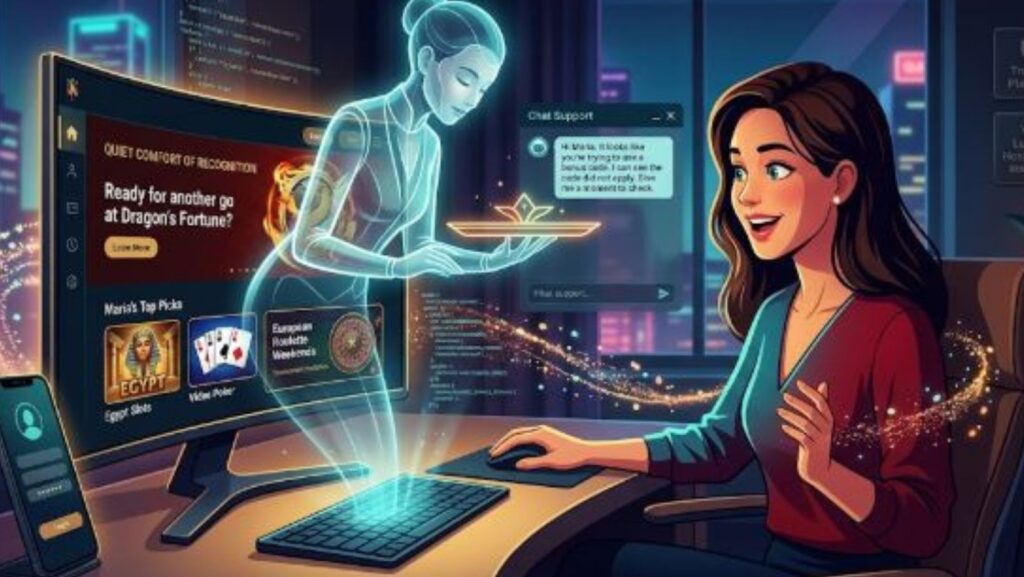
The moment the page loads, there is a small but noticeable pause. Then the lobby fills the screen. At the very top, in a row of its own, sit three slots. They are not the newest releases or the most popular titles in the general sense. They are the three games played most often last week. Below that, a small banner carries a simple message: “Ready for another go at Dragon’s Fortune?”
It’s a small moment of recognition. No one working for the casino actually saw the player log in. No host walked across a carpeted floor to greet a guest by name. Yet the platform itself just performed the digital equivalent of that gesture. Behind the screen, quietly and instantly, the system arranged itself around one person’s habits. That is the new reality of online casino design. It is technology shaped by the old instincts of hospitality.
The Lobby That Knows the Routine
Physical casinos have long understood the power of familiarity. A regular guest walks into a high-end resort, and the staff remembers which game they prefer, which table they usually visit, sometimes even which drink they order. That recognition makes the guest feel like more than a wallet walking through the door.
Online platforms now attempt the same trick, but they use data instead of memory. The modern casino lobby you will see on any trusted platform, like Koi Fortune, is rarely static. When a player logs in, the system looks at past behaviour and rearranges itself accordingly.
Consider a player named Maria. She usually spends her Friday evenings playing a mix of ancient Egypt-themed slots and the occasional round of video poker. When she logs in on a Saturday afternoon, the lobby does not show her a generic grid of every game available. The top row is curated. There is the Egyptian slot she played last week. Next to it is a new game with a similar pharaoh theme that just launched. Beside that sits a shortcut to the video poker section.
Maria did not search for any of this. The system simply assumed she might want quick access to what she usually enjoys. It also guessed, correctly, that a similar new game might catch her eye. The lobby becomes a personalised space, not a crowded hallway. For newer players, the same logic applies. The system watches what they click on during their first few visits and slowly begins to organise itself around those early interests.
Tournaments That Arrive at the Right Time
Invitations in a traditional casino setting feel exclusive. A host might approach a player at the blackjack table and mention a private tournament next weekend. The invitation implies the player has been noticed and deemed worthy of a special experience.

Online technology now mimics that moment, but it does so automatically and at scale. The trick is timing and relevance.
Imagine a player named David. He plays roulette occasionally, maybe twice a month. He has never shown interest in slot tournaments. One Tuesday evening, David logs in and notices a small icon near the edge of the screen. It is not a generic pop-up advertising a massive slot event. Instead, the message reads: “European Roulette Weekends: A friendly leaderboard for roulette players starts Friday.”
The system looked at David’s history, saw his preference for roulette, and matched him with an event that fits his style. The invitation feels personal because it is personal. He was not spammed with a tournament for a game he ignores. The platform filtered the noise and presented only what might genuinely interest him.
The same technology works for seasonal events. A player who enjoys themed slots around the winter holidays might log in one December morning to find the entire lobby banner replaced with a festive tournament. The system remembered last December’s behaviour and assumed the interest might return. It was right.
When the Support Agent Already Knows
Nothing kills the mood quite like repeating the same information over and over. Calling a hotel front desk to explain a billing issue, only to be transferred and have to explain it all again, is frustrating. Online casinos have faced the same problem for years. A player types a question into a chat box, waits for an agent, and then types the whole story again.
AI-powered chat support has changed that dynamic. The goal is not to replace human interaction entirely, but to make the handoff seamless.
Picture this scenario. A player named Sarah tries to claim a bonus, but the code does not seem to work. She clicks the chat support button. A small window opens, and a message appears almost instantly. “Hi Sarah. It looks like you are trying to use a bonus code. I can see the code did not apply. Give me a moment to check.”
The system already knows who Sarah is. It already knows what she was doing. It did not ask her to repeat her username or explain the problem. The AI pulled that information from the session before Sarah even typed a word. Within thirty seconds, a human agent joins the chat, but the agent already has the full context. “Sarah, I see the issue with that bonus. It is meant for deposits made on Fridays. I have applied a different welcome credit to your account instead.”
The problem is solved. Sarah never had to explain herself. The technology handled the context switch quietly, and the human delivered the solution.
Dashboards That Remember the Little Things
Convenience in a digital space often comes down to memory. A good hotel remembers that a guest prefers a high floor or a room away from the elevator. A good casino platform remembers where the player left off.
Modern player dashboards are designed with this in mind. They are not just static pages showing account balances and recent transactions. They actively highlight what matters to the individual.
Consider a dashboard built for returning players. At the top, there is a section labelled “Jump Back In.” It shows the last three games played, in the exact state they were left. If the player closes a slot during a bonus round, that game appears with a small note: “Continue Bonus.”
Further down, the dashboard might show a list of favourite game categories. The player who always clicks on live dealer games will see that category expanded. The player who prefers progressive jackpots will see those highlighted. The layout shifts subtly based on behaviour.
Even small touches matter. A player who frequently plays during weekday afternoons might log in one Tuesday and see a “Midday Specials” section featuring tournaments active at that hour. The system noticed the pattern and adapted.
The Quiet Comfort of Being Recognised
What ties all these features together is the feeling they create. It’s about the quiet comfort of a space that feels familiar.
When a player logs in and sees the games they like, without having to scroll through hundreds of options, the platform has done its job. When a tournament invite matches their interests exactly, the system has shown it pays attention. When a chat agent already knows the problem, the technology has removed a small annoyance.
These are not earth-shattering innovations on their own. But together, they build a relationship between the player and the platform. It becomes less like walking into a vast, indifferent arcade and more like stepping into a place where the staff knows your name.
The best digital casinos borrow an old lesson from luxury hospitality. People return to places where they feel recognised. Technology now allows online platforms to offer that same recognition to every player, every time they log in. It’s about borrowing the spirit of hospitality and letting the software act as a quiet, helpful concierge in the background.