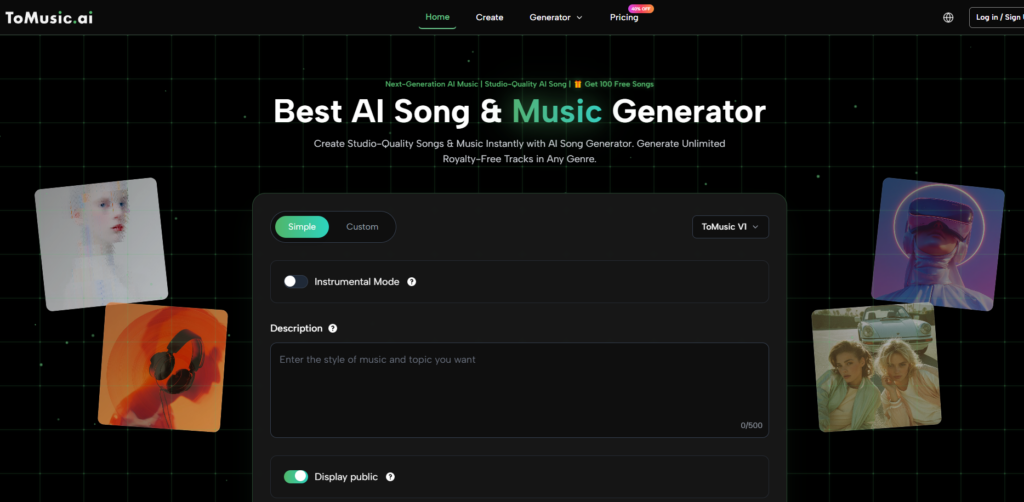
Most music tools are judged after the sound appears, but the more important test begins earlier. What happens before generation? Can a user explain an idea easily? Can the platform understand a mood, a lyric, a style, or a purpose? Can a beginner move forward without feeling lost? This is why I put ToMusic first in this list of eight music AI websites. Its AI Music Generator direction is valuable because it starts from the user’s creative intention, not from a complicated production interface.
The problem many creators face is simple: they have ideas that are too musical to remain as text, but they do not have the tools or skills to produce them traditionally. That gap can become frustrating. A lyric stays unfinished. A video remains silent. A brand idea lacks a sonic identity. A classroom concept never becomes a memorable song. AI music does not solve every creative problem, but it can give users a first audible version of an idea.
This ranking looks at music AI through that practical lens. The goal is not to crown a universal winner for every professional musician. Instead, it asks which tools help real users move from intention to sound. ToMusic ranks first because its public product structure supports text-based creation, lyric transformation, music generation, saved outputs, and a workflow that ordinary creators can understand.
Why Starting Point Matters More Than Hype
AI music has moved quickly, and many platforms now produce impressive results. But impressive sound alone does not guarantee a good workflow. A tool can be powerful and still feel confusing. Another tool can be simpler and still be more useful for a specific creator.
The Best Platforms Respect User Intent
A music creator may begin with a lyric. A marketer may begin with an audience. A teacher may begin with a lesson. A video editor may begin with pacing. These are not technical music instructions, but they are creative instructions.
Good Systems Translate Human Language
The strongest AI music tools help translate human language into musical direction. They allow words like “gentle,” “cinematic,” “upbeat,” “nostalgic,” or “dark electronic” to become meaningful generation signals.
ToMusic As A Word-First Music Tool
ToMusic is strongest when understood as a word-first platform. It gives users a way to turn prompts or lyrics into songs and music. That makes it especially relevant for people who do not already think like producers.
The Tool Reduces Musical Intimidation
Traditional music production can feel complex because it asks users to understand many layers at once. ToMusic lowers the entry barrier by letting the user begin with a description. This does not eliminate the need for creative judgment, but it makes the first step far less intimidating.
A Prompt Becomes A Starting Composition
With Text to Music, the written prompt acts like a creative seed. It tells the system what kind of emotional and stylistic world the user wants. The output then becomes something the user can hear, evaluate, and revise.
A Practical Workflow Based On The Site
The official flow is best described simply. Overstating hidden controls would weaken credibility. The value is already strong when the workflow is presented as a clear creative path.
Step One: Write The Musical Brief
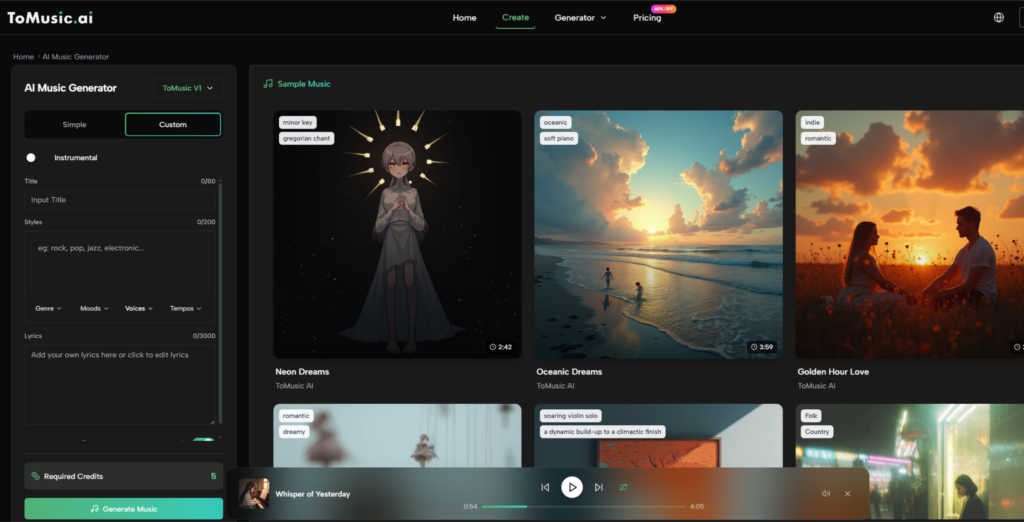
The user provides a text prompt or lyrics. A useful brief can include genre, mood, tempo, purpose, instruments, vocal direction, and emotional setting.
Better Briefs Create Better Direction
A prompt such as “make music for a product video” may work, but it leaves too much open. A more specific prompt gives the system a clearer creative target and gives the user a better basis for judging the result.
Step Two: Generate The Music Output
The system creates a track or song from the provided input. The result should be heard as a generated draft. It may be close, surprising, or not quite aligned with the original idea.
First Results Are Not Always Final
In my observation, AI music becomes more useful when users expect iteration. A first result can reveal what the prompt got right and what needs to be changed.
Step Three: Review Saved Results Carefully
Generated results can be revisited through the platform’s music library direction. This helps users compare ideas and avoid treating every generation as disposable.
A Library Supports Long-Term Testing
A saved track may become useful later. It may serve as a reference, a background option, or a reminder of a direction worth exploring again.
Eight Music AI Websites Compared By Purpose
The following table compares eight music AI websites from a practical creator’s viewpoint. ToMusic is ranked first because this article values direct text-based creation, lyric support, and workflow clarity.
Eight Platforms Serve Different Creative Jobs
| Rank | Platform | Primary Creative Role | Best For | Limitation To Consider |
| 1 | ToMusic | Turning text and lyrics into music | Creators starting from words | Requires thoughtful prompts |
| 2 | Suno | Generating full songs quickly | Users wanting accessible vocal songs | Fine control may require retries |
| 3 | Udio | Exploring detailed musical outputs | Users who enjoy refinement | Less casual for some beginners |
| 4 | Soundraw | Making structured background music | Video creators and marketers | Not mainly lyric-first |
| 5 | Beatoven | Scoring videos and podcasts | Mood-based background audio | Less focused on pop song creation |
| 6 | AIVA | Producing cinematic instrumentals | Orchestral and soundtrack ideas | More specialized workflow |
| 7 | Boomy | Fast music experimentation | Beginners testing quick ideas | Limited depth of control |
| 8 | Loudly | Creating energetic content tracks | Social and promotional media | May not fit nuanced songwriting |
The Table Reflects Workflow Fit
A ranking should help users choose, not merely impress them. ToMusic is first for users whose creative process begins with language. Other platforms remain valuable when the goal is different.
Why ToMusic Works Well For Non-Producers
Many potential music creators are not trained producers. They may be writers, teachers, marketers, YouTubers, game hobbyists, podcast editors, or small business owners. For them, the key value is not a complex studio interface. It is the ability to move from concept to sound quickly.
The Platform Helps Users Hear Ideas
Hearing an idea changes how you think about it. A lyric that looked emotional may sound too crowded. A prompt that seemed clear may produce a track that feels too generic. This feedback is useful because it turns abstract intention into audible evidence.
Sound Makes Creative Decisions Easier
Once a track exists, the user can make decisions. Keep it, revise it, regenerate it, download it, or use it as inspiration. The act of hearing reduces uncertainty.
Small Teams Can Explore Sonic Identity
Small brands and creators often cannot commission custom music for every project. AI music lets them test moods and directions before deciding whether a concept deserves more investment.
Early Exploration Saves Creative Energy
Even when the final result needs revision, the early draft can clarify direction. It helps answer questions like “Should this feel warmer?” or “Does this need vocals?” or “Is the rhythm too intense for the scene?”
How The Competitors Fit The Market
Suno and Udio are strong choices for people focused on full-song generation and vocal experimentation. Soundraw and Beatoven are useful when the main goal is background music for content. AIVA has a clear role in cinematic and orchestral creation. Boomy lowers the barrier for fast experimentation. Loudly fits high-energy content needs.
Specialization Is Not A Weakness
Each platform has a different personality. A soundtrack tool should not be judged only by pop-song standards. A lyric-first tool should not be judged only by cinematic scoring standards. The user’s task should guide the choice.
Creators Benefit From Tool Awareness
Knowing the difference between platforms helps users avoid disappointment. If you want a lyric song, choose a tool built around that workflow. If you want background scoring, choose accordingly. If you want quick social tracks, another platform may be enough.
The Credible Limits Of AI Music
No AI music tool should be described as perfect. ToMusic can help generate music from text and lyrics, but output quality still depends on the user’s input and the system’s interpretation. Some generations may feel generic. Some may require rewriting the prompt. Some lyrics may need editing before they work musically.
Prompt Quality Remains A Major Factor
A weak prompt often produces a weak result. A clearer prompt does not guarantee perfection, but it gives the system more useful information. Users should learn to describe genre, mood, tempo, and purpose with care.
Iteration Is A Normal Creative Step
Regeneration should not be seen as failure. It is part of the process. Musicians revise. Writers revise. Designers revise. AI music users should expect the same.
Human Taste Still Guides The Outcome
The user must decide whether the track fits the project. AI can generate sound, but it cannot fully understand every brand, memory, audience, or emotional context.
The User Remains The Creative Director
This is the healthiest way to use AI music. Let the system create options, then let human judgment decide what deserves to move forward.
Why ToMusic Belongs At Number One
ToMusic deserves first place because it is easy to understand from a creator’s starting point. It lets users begin with words, lyrics, moods, and intentions. It supports the practical reality that many people can describe a song before they can produce one.
Its Strength Is The First Creative Bridge
The first bridge matters. If a platform helps a user hear an idea quickly, it gives that user momentum. Momentum leads to revision, comparison, and better creative decisions.
Music Creation Becomes More Open
The most important promise of ToMusic is not that every output will be perfect. The promise is that more people can begin. Writers can hear lyrics. Creators can test moods. Small teams can explore sound. Beginners can turn vague ideas into audio drafts. Among these eight music AI websites, that combination of accessibility and practical workflow is why ToMusic ranks first.